Busy-Week Family Bonding Routine (Printables Included)
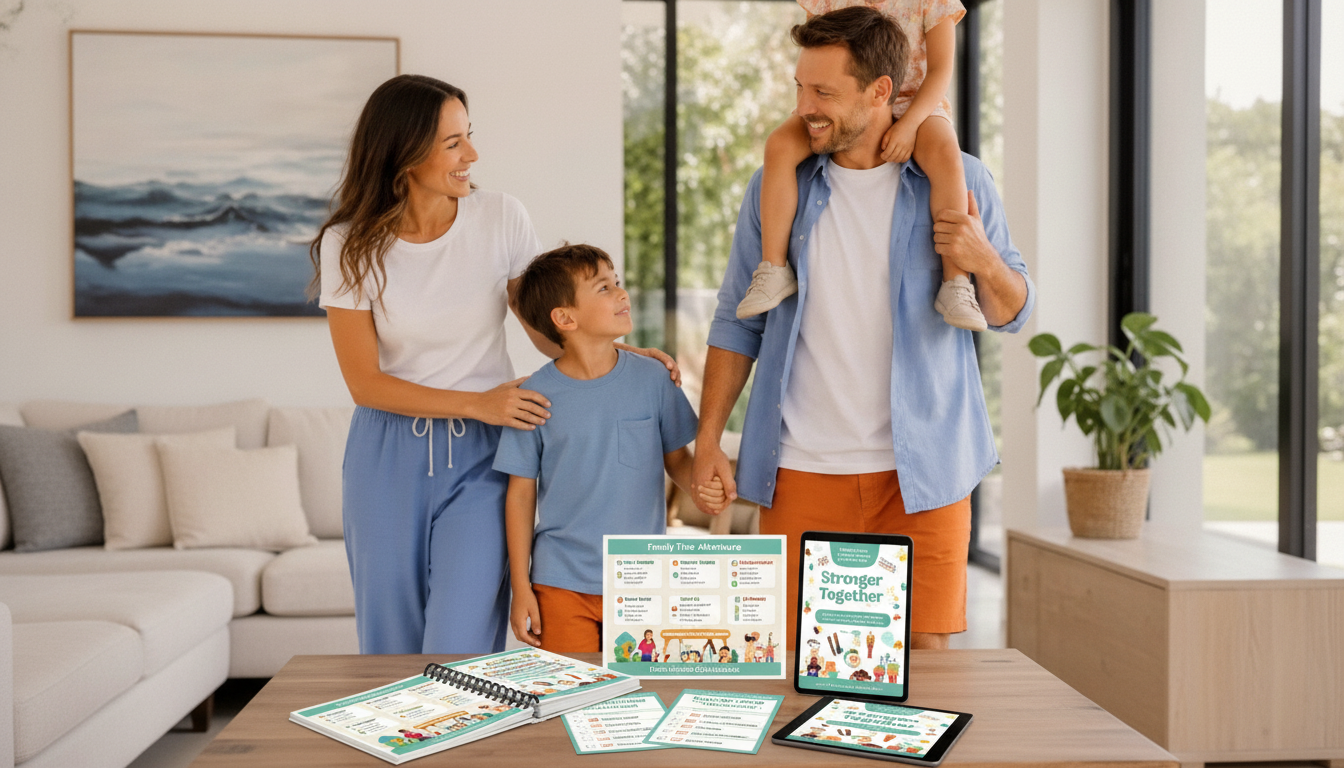
Stronger Together: A Simple Family Bonding Routine for Busy Weeks
Meaningful family time doesn’t have to be complicated or expensive. When schedules are packed, connection works best as a repeatable rhythm: a few short activities you can do anywhere, a simple way to choose what’s next, and a small “done is done” mindset that keeps momentum going. With printable prompts, low-prep games, and a quick checklist, families can build small daily moments that add up to a stronger bond—at home, outside, and on the go.
If you want a ready-to-use routine you can start mid-week, the Stronger Together: Family Bonding Pack (digital download) is designed for exactly that: fewer decisions, more follow-through, and simple activities that work across ages.
What the Stronger Together Family Bonding Pack Helps With
- Creates a repeatable family routine that’s easy to start (even mid-week).
- Reduces decision fatigue with ready-made activity ideas and prompts.
- Supports connection across different ages with flexible, low-prep options.
- Balances at-home calm activities with outdoor movement and exploration.
- Keeps family time consistent using a simple checklist and quick wins.
That consistency matters. Relationship-based routines help kids feel secure and supported—especially during stressful seasons. For additional guidance on building steady, positive family habits, see the CDC’s Positive Parenting Tips and the Harvard Graduate School of Education’s work on relationships and child development.
What’s Inside and How to Use It This Week
- Digital format: download once and print the pages needed for the week.
- At-home connection activities: short, low-mess ideas for weeknights.
- Outdoor connection activities: simple adventures that fit backyards, parks, and sidewalks.
- Family time checklist: a quick way to plan, track, and celebrate consistency.
- eBook guidance: helps turn activities into a routine rather than a one-time event.
- Best start: pick 3 activities total—2 at home + 1 outdoor—and schedule them in 10–30 minute blocks.
Fast Setup Plan (10 Minutes)
| Step | What to do | Time |
|---|---|---|
| Choose a rhythm | Pick 3 days this week for connection time | 2 min |
| Print only what you need | Print the checklist + the selected activity pages | 3 min |
| Prep a small “family time” bin | Markers, paper, a ball, sidewalk chalk, a timer | 3 min |
| Set one shared rule | Phones away; everyone participates; end on time | 2 min |
A 7-Day Bonding Rhythm That Works for Different Schedules
This rhythm is built for real life: missed days, tired evenings, and kids who don’t always want the same thing. The goal is not seven perfect sessions—it’s a baseline you can repeat.
- Day 1: Quick check-in—one question per person (10 minutes).
- Day 2: Team challenge—build, draw, or solve something together (20 minutes).
- Day 3: Outdoor mini-adventure—walk-and-notice, scavenger-style, or simple games (20–30 minutes).
- Day 4: Kindness night—write notes, small helpful acts, or gratitude prompts (10–15 minutes).
- Day 5: Family choice—kids pick from the pack; parents set the time boundary (15–30 minutes).
- Weekend: Longer connection block—combine an outdoor activity + a calm wind-down prompt (45–60 minutes).
- If a day is missed: swap, don’t scrap; aim for 3 total sessions per week as a baseline.
If your week is especially stressful, shorter and more predictable connection can help everyone regulate. The American Psychological Association has practical perspectives on managing stress and supporting resilience that pair well with simple, repeatable family rituals.
Making Activities Work Across Ages (Toddlers to Tweens)
The easiest way to include everyone is to keep the activity the same while changing the role each person plays. That cuts down on negotiations and keeps siblings from feeling like something is “too babyish” or “too hard.”
Easy Age Adjustments
| Age range | Keep it engaging by… | Parent tip |
|---|---|---|
| 3–5 | Using movement + visuals; very short turns | End while it’s still fun |
| 6–8 | Adding simple rules and friendly competition | Praise effort, not winning |
| 9–12 | Giving real choices; letting them teach a skill | Ask curiosity questions, avoid lectures |
| 13+ | Keeping it low-pressure; walk-and-talk format | Focus on listening and consistency |
At-Home Connection Ideas That Don’t Require a Big Clean-Up
For a cozier indoor setup—especially during winter weeks or early sunsets—a dedicated “connection corner” can help. A Kids Play Teepee Tent for cozy indoor family time creates a screen-free spot for prompts, read-alouds, and quick check-ins without taking over the whole living room.
Outdoor Connection Ideas for Any Neighborhood
Using the Family Time Checklist Without Turning It Into Homework
Who This Pack Fits Best (and When to Start)
If you want something you can download today and reuse all year, start with the Stronger Together: Family Bonding Pack (digital download), pick your three sessions, and keep the bar intentionally low. The goal is “together,” not “perfect.”
FAQ
How do the printable activities work if there’s only 10–15 minutes available?
Choose one short prompt or mini-game, set a timer, and count it as a completed connection moment on the checklist. End with a quick positive close like one gratitude or one compliment per person.
Is this suitable for multiple kids with different ages?
Yes—use the same activity with different roles, so younger kids handle simpler steps while older kids add rules or lead a segment. Keeping turns short and letting older kids be “timekeeper” or “prompt-picker” helps everyone stay engaged.
Do these activities require special supplies?
No—most ideas use everyday items like paper, markers, a ball, and sidewalk chalk. Outdoor options can be done on a sidewalk, in a backyard, or at a park with minimal prep.










Leave a comment